Showing posts with label simon wessely. Show all posts

Saturday, 19 May 2018

Millions Missing protest - Edinburgh 12 May, 2018

I got to the #millionmissing protest for the last twenty minutes, just in time to hear Carol Monaghan MP's speech. I was happy to be able to shake her hand and give her a wee brief hug afterwards. I told her she will never know the enormity of what she is doing by challenging PACE and campaigning for biomedical research. The sun was shining and it was glorious to see activism in action by a community of patients who have been wronged by the medical establishment for far too long. Heartbreakingly, the inquest of 21-year-old Merryn Crofts, who died a year ago, was held yesterday and the coroner's verdict was death caused by ME. A mental health expert stated that Merry had no psychological illness. 

I hope the core of psychiatrists with Wessely at the helm are thoroughly ashamed of themselves. Wessely, of course, has said on different occasions that he doesn't care how unpopular it makes him but the more severely ill you are with ME, the more likely there is to be a psychological element.The Wessely gang are so thick-skinned and arrogant, I doubt very much they will be touched by this verdict, they will no doubt blather on about how ME and CFS are not the same thing, and that they have always been studying CFS - though they happily conflated ME with fatigue for decades - always careful to say in the small print that ME and CFS may not be same illness. This was always their get-out clause.

Shame on all of them, for all time.

Photo from @lighthousebks of Saturday 12 May:


Saturday, 13 August 2016

Who has control of the story? - Anna Katharina Schaffner's EXHAUSTION

I recall when I read Salman Rushdie's Joseph Anton in 2012, my favourite line was, 'Who shall have control over the story?'. I thought, naturally, of the way the illness myalgic encephalomyelitis (ME) - an illness I have had for thirty-three years - has been ceaselessly misrepresented in the media, and of the way health editors, journalists and academics have locked onto the narrative of a group of UK psychiatrists - who harmfully conflate ME with unexplained 'chronic fatigue' - and recycled it uncritically, for the last two decades:
'At the heart of the dispute over The Satanic Verses, he said, behind all the accusations and abuse, was a question of profound importance: Who shall have control over the story? Who has, who should have, the power not only to tell the stories with which, and within which, we all lived, but also to say in what manner those stories may be told? 

I think most would agree that ME sufferers have not had the power to tell their stories, that they've not been allowed a voice. The vacuous 'yuppie flu' headline in the 1980s is nothing compared to what is dished out now. It's highly unusual to read accurate accounts of the illness in the media - unless it's a first person account - and the question of who shall have control over the story has been in my head again these past two weeks or so.

*

A few years ago I had a friendly exchange with a young academic on a medical humanities thread, she was researching the history of exhaustion for her book, including ME and 'chronic fatigue syndrome'. ME, of course, belongs no more in a 'history of exhaustion' than MS or lupus or cancer, but I pointed her in the direction of my novel, of Dr Melvin Ramsay's brilliant 1986 book on virally-triggered ME (my now retired neurologist wrote the preface), and of the International Criteria Consensus 2011. I clarified that ME was not 'chronic fatigue' or indeed chronic fatigue syndrome. I explained that post-exertional malaise (PEM) - also known as post-exertional neuroimmune exhaustion (PENE) - is the cardinal symptom of ME. She thanked me and said she would explore these texts.

I thought no more of this until the weekend before last, when someone on Twitter told me that Anna Katharina Schaffner had quoted me extensively in her new book EXHAUSTION and was 'trying hard to present us in unflattering ways'. I googled and found a Times Literary Supplement review* in which the reviewer had said:
In a chapter called 'Mystery Viruses' Schaffner frames Nasim Marie Jafry's semi-autobiographical novel The State of Me (2008) with a nuanced exploration of the controversial diagnoses of chronic fatigue syndrome, myalgic encephalomyelitis and post-viral fatigue syndrome. The author shows how and why both sufferers and medical researchers have so much invested in alternative somatic and psychological explanations'.
I was, of course, intrigued and got a copy of her book. I figured the truth would lie somewhere between 'unflattering' and 'nuanced'. Sadly,  nuanced it is not. Schaffner, while attempting to appear empathetic has, consciously or unconsciously, managed to misrepresent me in several ways - including misquoting me - and 'Mystery Viruses' is - wearily and, perhaps, unsurprisingly - little more than a puff piece on Professor Simon Wessely. He's referenced in 80% of the bibliography along with the dreadfully cruel social historian Edward Shorter (I guess he deleted this post).  Schaffner can see why ME sufferers would be offended by the latter, but nevertheless finds him 'thought-provoking' and gives him generous room in her chapter.

Bizarrely, not one reference is made by Anna to any ME biomedical researcher by name - as if they simply don't exist. Since she's a reader of my blog,  she could have, for example, mentioned Stanford's Professor Jose Montoya, specialist in infectious diseases, whom I had the great pleasure of meeting briefly last year. Montoya wants USA medical institutions to apologise to ME patients for the way they have been treated (the Norwegian government has already apologised to its sufferers - an anti-cancer drug Rituximab is currently under trial there for ME). Schaffner acknowledges ME is a controversial diagnosis, but sets up a false opposition of scientists against patients. Let's not  forget in early 2015, the Institute of Medicine's (USA) definitive report which - after examining 9000 research papers - concluded that ME is not psychological.  Research in the USA has been energised lately through the National Institute of Health. And the first European ME tissue biobank opened in London in May. (Interestingly, ME sufferers in Scotland are not permitted to donate blood.)

The task ahead is to unlock the mechanism of this poorly understood illness. That is all that is important. But Anna insists, instead, on embracing the dying narrative of UK psychiatrists, which casts ME sufferers as ungrateful militants.  I do wonder is the reading public not bored with this particular narrative by now? ME sufferers have  horribly diminished - often ruined - lives, but certain writers are still feting Simon - who apparently left the field fifteen years ago - by putting him at the centre of the narrative. Why do they persist in their misguided praise? Why are they not following the science?

Anna says in her introduction that 'works of fiction, in particular, can grant us precious experiential insights into how particular physical conditions...may feel', and yet on reading my novel appears to have wilfully misunderstood why ME sufferers are rightly angry with Wessely and others, who stubbornly push their harmful biopsychosocial theory,  for which they have not a scrap of evidence. When they suggest ME sufferers are perpetuating their own illness with aberrant beliefs, these psychiatrists are simply acting out their *own* beliefs. Really, think about it - how can 250,000 ME sufferers in the UK alone - former lawyers, doctors,  students, dancers, engineers, artists, teachers etc - all be keeping their own hellish symptoms going by faulty thinking? A kind of synchronised somatising? It's utter nonsense.

Schaffner has  not, I assume, accessed any of the medical sources I suggested, and gives a garbled history of the terminologies of ME and CFS: for the whole chapter she refers to 'CFS/ME' - the favoured label of UK psychiatrists. The rest of us talk about ME - or 'ME/CFS', if we have to. (It is admittedly confusing as in the USA, true ME is referred to as CFS, which is where the name originally came from in 1980s. Many researchers use the name CFS.)  Dr Daniel Peterson - involved in the Lake Tahoe outbreak in 1984 - speaks up here in support of the name ME, acknowledging that the label CFS hugely trivialises the illness.

However, during the 1990s, Simon Wessely and others effectively tried to 'disappear' Ramsay-defined ME, the illness I have, merging it with CFS, using the much broader Oxford Criteria (1991), which can include patients who *do* have a psychiatric basis to their fatigue. The CDC (Fukuda) 1994 criteria in USA that Anna refers to also have problems of being too broad, but she is, doubtless, unaware. Leonard Jason, professor of psychology, is excellent on criterion variance and the importance of case definitions. Ramsay-ME has by definition more severe physical impairment. The problem is that no one is speaking about the same illness and UK psychiatrists seem happy to conflate them. Most journalists writing about ME/CFS have no idea of the many different criteria. It's an unholy mess. People are misdiagnosed as having ME when they actually have CFS. It was recommended by the National Institute of Health in 2015 that the Oxford Criteria for CFS be retired as they could harm research.

This is how and why nonsense about ME is written and how a dysfunctional narrative has been perpetuated. The wrong people have been controlling the story. And younger, naive writers pick up the baton. Listing the symptoms of ME, Schaffner includes 'a perceived sense of effort', making her bias - and ignorance - obvious early on. Post-exertional malaise - described in this short film by Dr Mark VanNess -  is listed in the Institute of Medicine (2015) report as one of several  core symptoms, objectively verifiable:
 
          Post-exertional malaise (PEM)
PEM is worsening of a patient’s symptoms and function after exposure to physical or cognitive stressors that were normally tolerated before disease onset. Subjective reports of PEM and prolonged recovery are supported by objective evidence in the scientific literature, including failure to normally reproduce exercise test results (2-day cardiopulmonary exercise test) and impaired cognitive function after exertion. There is sufficient evidence that PEM is a primary feature that helps distinguish ME/CFS (SEID) from other conditions.
 *

Before moving on to discuss my novel, Schaffner writes, How does living with chronic fatigue actually feel?' - disrespectfully disregarding that ME is not 'chronic fatigue' and that neither I nor my character Helen Fleet live with chronic fatigue (I had pointed this out to Schaffner in our exchange). I live with a poorly understood neuroimmune illness, which has many very disabling symptoms, severe fatigue being only one. These other hellish symptoms are described in detail in The State of Me, but Schaffner does not seem to think they are worthy of discussion. (Of course, since she has appropriated ME -  via my novel - for  a monograph on exhaustion, it would not suit her to look at the many other symptoms.)

My character Helen Fleet is no saint - I wanted her to be flawed - ill people are not saints in real life or fiction. And Helen Fleet is not me and I am not Helen Fleet, but all the medical procedures are true. Schaffner, at first, seems to empathise with Helen, recognising her humour in helping her cope with a life of chronic illness. But she skips over the utter hell and shock and heartbreak of being largely bedbound, aged twenty, getting a diagnosis of ME - wrongly referring to Coxsackie B4 as 'a rare virus' - it isn't - and failing to mention that a cluster of people became ill with ME in the west of Scotland at this time (described in Melvin Ramsay's text, which I recommended to her).

More tellingly, she ignores  the fact that Helen is diagnosed by a consultant neurologist. She ignores the 'full house of abnormalities', the abnormal muscle biopsy and EMG. And goes on to ignore the (albeit experimental) immunotherapies Helen has: the plasma exchange, the anti-viral drugs, the ACTH injections, the vitamin C/magnesium drips, the evening primrose oil clinical trial. Of course, she is constrained by how much she can quote without permission, but it is bizarre she would not reveal to her readers that my character is diagnosed in a neurology clinic by a consultant neurologist, as I was. Of course, that might undermine her 'Wessely as saint' narrative later on, the Wessely who has stated: 'Like it or not, CFS is not simply an illness, but a cultural phenomenon and metaphor for our times'.

Schaffner then starts to dabble in amateur psychology examining the causes of my own illness, by psychoanalyising my character Helen. She suggests that because fictional Helen's fictional parents got divorced, that maybe Helen (and I) are suppressing painful childhood emotions. Her audacity is quite something, others have commented on how intrusive, not to mention, unethical this is. She can simply not understand why Helen is so against a psychiatric explanation of her illness. She seems to forget that Helen's story is informed by my lived experience of ME since the age of 18, along with a consultant neurologist's diagnosis in 1984, and mounting, incontrovertible biomedical evidence that ME is physical. But this is not quite enough for this young academic - she appears to know more than me about my own illness. Perhaps she would like to track down the others who got ill in the west of Scotland post-Coxsackie virus and psychoanalyse them too?

Schaffner goes on to highlight Helen's 'scathing' attitude  towards those who suggest her illness may not be physical in origin. Her empathy for  Helen evaporates and she gets to what she really wants to say, no longer literary critic but judge and jury, exploring the issue of how I/Helen/ME sufferers dare to be scathing about psychiatrists (who don't believe ME is physical), in particular, Professor Simon Wessely. You have to wonder, did she even read my novel or did she just flip through it looking for extracts that would suit her chapter?

She describes Simon as 'one of the most important CFS researchers in Britain' - I beg to differ - he has conflated CFS with ME and caused utter chaos since the early 1990s. Schaffner is breathtakingly careless, though, as she appears keen to merge my anger at Wessely with those who have allegedly 'targeted' him (the threats narrative was tirelessly explored in UK media). She may like to know that Simon Wessely and I exchanged several long emails a couple of years ago (polite but ultimately fruitless, in my opinion). And I certainly do not regard myself as being scathing, I'd say my reaction, under the circumstances, is rational and healthy. Schaffner has quoted selectively from my blog, but she could so easily have read all the research that I post and tried to learn, but instead she took the easy option, recycling the weary, psychogenic narrative that the London media loves to recycle again and again. I guess she missed this quote from a journalist in 2007: 'I’m sure there is a lot of psychiatric literature on how denying another person’s reality triggers all sorts of deep hostile responses'. And I guess she also missed Simon's open letter conversation from 2012 with the Countess of Mar, a long time advocate for people with ME.

Anna also writes: 'Jafry not only wishes that doctors who suggest graded exercise or CBT would fall ill with ME themselves...'. This is simply  dishonest. I often say - as Helen does - let those who don't believe that ME is a physical illness have it for a day or a week, then they will soon believe.  I say let them try graded exercise when they have experienced severe ME (they wouldn't, they couldn't). I say that graded exercise (GET) is dangerous for people with ME, because it is.  Nowhere have I said I want doctors who recommend GET and cognitive behavioural therapy (CBT) to get ill themselves. But Schaffner  happily misrepresents me. Well-meaning doctors who are in the dark may recommend these therapies because the hugely flawed NICE guidelines tell them to. There was, in fact, an excellent article recently in the British Journal of General Practice, highlighting the fact that GET and CBT can cause harm.

Schaffner seems largely unaware of the abuse and neglect that people with ME have suffered, the unrelenting, detrimental nonsense in the press. I recall five or six years ago someone on a forum saying that ME sufferers just wanted to fucking stay at home and eat pot noodles all day. And an anonymous doctor suggesting 'lead in the gullet' was what was needed. This kind of online  abuse is not unusual. It would be unacceptable for any other patient population to endure this.

Neither, of course, does she acknowledge the ongoing problems with the PACE trial (which underpins GET and CBT as safe, effective therapies). This is the trial that used the Oxford Criteria;  the trial where you could be more ill at the end than at the beginning and still be considered recovered; the trial that cost £5 million pounds. Schaffner tells us blithely that  GET and CBT are  'moderately efficacious' for the relief of symptoms. I think those who have gone from mild to severe ME after graded exercise would disagree. **We are still awaiting the results of the outcome of the QMUL tribunal in May over the PACE trial and its refusal to share data. But because the trial was spun so successfully in the media, no one is really aware of the problems, apart from ME sufferers and the scientists who are challenging The Lancet over its publication of PACE in the first place.

I often say it can take a decade to adjust to a life with severe ME, we do everything in our power to recover, to keep hold of our lives, but the illness is bigger than us. This is not nihilistic, it is fact. We relapse severely when we push ourselves; we learn to pace, it is how we cope, how we endure, how we survive. We also have to cope with the emotional stress that comes with physical decline. Our families suffer as they watch us, helplessly from the sidelines. They too have lost a daughter or a husband or a mother or a brother to this hellish illness. Yet, on top of the physical hell - and it is hell in its acute/severe form - we as an ill population have to face these ongoing, irrational claims by a group of psychiatrists. I honestly don't know how I'd have coped when first diagnosed had I been subjected to those who arrogantly  tell us that pacing/resting is counter-productive, and who promote GET and CBT. I count my blessings I was diagnosed a good seven years before these particular psychiatrists dominated the narrative, before they controlled the story. Their advocating CBT, of course, is not to help us cope, as with other physical illnesses, it is to rid us of our false illness beliefs.

I'd confidently say that all ME sufferers, regardless of severity of illness, have been neglected or derided at some point by someone somewhere, but there is a truly invisible, neglected group: 25% of  patients are so severely ill, they are housebound/bedridden for decades, they don't make any improvement at all. There are patients who tragically die.  What have these 'CFS' psychiatrists done for the most severely ill apart from cast doubt on their psychological health?  It's scandalous.

As I said at the beginning, Anna has misrepresented me in several ways, consciously or unconsciously, though no doubt appearing nuanced to those who know little about ME. I think perhaps the most ludicrous sentence she has written is:  'In her view, the cardinal symptoms of of ME, are post-exertional malaise, or post-exertional neuroimmune exhaustion, which are caused by viral triggers'. 

In my view? Dear god.

And while I find it both amusing - and somewhat impudent - that she questions myself and the many, many ME sufferers and advocates who dare to challenge the authority of UK psychiatrists, I'm not sure if she's being incredibly naive or simply disingenuous. She has, of course, been heavily influenced by the never-ending spin coming out of King's College. It's a little disappointing, but she is certainly not the first and no doubt won't be the last to appropriate ME as a chapter for her book (ME is the 'go to' illness if you need a chapter) with no real curiosity for truth. I'm glad she used extracts from my novel, hopefully others will now read it, but in doing so she demonstrates a lack of control in her own narrative. She is a literature scholar, after all, not a judge of how patients should respond to inappropriate and harmful treatment.

While Schaffner finds it 'ironic that Wessely should have become such a hated figure in the CFS/ME community', I find it 'ironic' that her book is published by Columbia University Press, which states: Columbia University Press seeks to enhance Columbia University’s educational and research mission by publishing outstanding original works by scholars and other intellectuals that contribute to an understanding of global human concerns. In early 2015, Mady Hornig and Ian Lipkin, both highly respected ME researchers at Columbia University, had this to say: Immune Signatures in Blood Point to Distinct Disease Stages, Open Door to Better Diagnosis and Treatment. But as I said before,  Anna mentions not one single biomedical researcher by name. They are not important in her landscape.

*

I can see that the narrative of ME is a morass from the outside, but those who really know, who really understand are patients such as myself who have lived through the politics, and seen the embedding of psychiatry since the 1990s, the very harmful conflation of ME with fatigue. In her cultural history of exhaustion Schaffner could have done something different, she could have explored why a group of doctors is clinging to an outdated model of ME, a veritable sinking ship, she could have asked why on earth this is happening. But she didn't. In 2016, almost thirty-three years after my own diagnosis, it's chilling that the psychogenic narrative of ME is still being given time of day. All that should be being discussed is biomedical research. Anything else is redundant and indulgent. It is we sufferers and serious biomedical researchers who should have control over the story.

*I've since had some emails with the TLS reviewer, who is a cultural historian - he was respectful and empathetic - while we still disagree on some points - and I think has learned more about the politics around ME.

** I see that QMUL has been ordered to release the PACE trial data. 

And here is info about the recovery data being sought.

*** And on re-analysis, the Agency for Healthcare Research and Quality (AHRQ) has declared the PACE trial findings to be invalid - GET and CBT are ineffective for 'ME/CFS'. Oxford criteria, once again, found lacking.

**** Blog from  Prof Vincent Racianello (immunology) on The Lancet/PACE circus, 29 August 2016

Sunday, 1 May 2016

Wellcome Book Prize 2016 - ignorance rewarding ignorance

*Updating this post: fantastic news, first ME biobank in Europe is officially opening its doors to external researchers on May 12 at London School of Hygiene and Tropical Medicine. More info here.

I resent using any more energy - it truly takes its toll - on the daft neurologist Suzanne O'Sullivan, but the travesty of her winning the Wellcome Book Prize is too important to ignore. I've been trying to correct her harmful nonsense about ME since she won the prize last week, on Twitter. She herself blocks everyone who challenges her, including the mother of severely ill patient Whitney Dafoe whose father, Stanford scientist Ron Davis, is valiantly trying to complete the ME jigsaw.

In serious scientific circles, there is no longer any doubt that myalgic encephalomyeltis/chronic fatigue syndrome (I hate that name, but it is used in research) is  a serious, complex physical illness - though poorly understood, it is NOT psychiatric or psychological. However, that didn't stop O'Sullivan from including ME in a chapter of her 2015 book, It's All in Your Head, a study of psychosomatic illness - or rather a series of anecdotes about patients she has seen. She has published before on carpal tunnel syndrome and non-epileptic seizures (I have not been able to find any papers on ME, unsurprisingly).  Whatever the merits of the other chapters, O'Sullivan has no expertise whatsoever in ME, but that didn't stop the judges from being seduced by her magnificent nonsense (worth noting I think that no one in the research world has heard of Suzanne O'Sullivan, but she is elevated to an ME 'authority' just by having this book published).

Her ME chapter is, of course, wholly uninformed and manipulative, unoriginal in its prejudice and bias. I reviewed the book last year on Goodreads.  Her Rachel chapter is revealing only in what it omits. It's fairly clear to anyone who is informed about ME -  as patient, carer or true specialist - that O'Sullivan is havering (good Scottish word). She's not going to rock the science, of course, that is progressing nicely - but unfortunately she is persuading new gullible readers that ME is an unconscious switch in our heads that flicks on and mimics serious illness. You couldn't fucking make it up that in 2016 this got the Wellcome Book Prize. The judges - I imagine intelligent and decent people - though only one seems to work in medicine/science - simply rewarded ignorance with ignorance.

What is *most* galling is the fawning, ignorant media, who have indulged her all week, themselves almost wilfully ignorant of biomedical research. They assume a mantle of authority. And readers and reviewers of O'Sullivan too become overnight experts in a neuroimmune illness they know nothing of.

I was told earlier by an obnoxious book reviewer (he was making quips about his own hypochondria and full of praise for her book, saying he'd be 'thrilled' to know he didn't have a serious neurological disorder, and wondering why do patients have  a problem with a likely psychological diagnosis) that the ME chapter is *only* 20 pages and that he had no interest in debating further. I told him I've been ill for 33 years, diagnosed by a consultant neurologist, and 250, 000 in UK have ME, so 20 pages is not just 20 pages; and I suggested perhaps it's best not to tweet about a book if you have no interest in discussing the issues. For this, he blocked me. My voice silenced just like that. Basically told to dry my eyes, we have nothing to complain about. A quarter of a million lives already severely diminished, further harmed by O'Sullivan's nonsense. Yes, book bloggers know best. What a luxury to be able to dismiss those 20 pages! He blocked others too who tried to educate him.

Interestingly, no one in the UK media has yet asked Suzanne O'Sullivan about the toxic PACE trial - which has just been in court over failure to share its data (someone on Amazon has suggested there might be a significance that one of the judges works for QMUL, but surely not, that is just too depressing to contemplate that judges would not be independent. Though the way this illness has been relentlessly politicised since the nineties truly stinks. Personally, I don't believe there was any 'fix', just lazy, old prejudices about ME being confirmed). O'Sullivan predictably praises GET/CBT in her book - cannily, without actually naming PACE - as the most effective treatment, with no reference at all to the harms of graded exercise. Just as she praises Simon Wessely, without naming him. His name, of course,  now carries too much baggage. Her claim that he is 'the person in the UK who has taken this illness the most seriously' is, I'd confidently say, a giant whopper (there are a few in the chapter). She conveniently omits the 1980s' UK specialists: Melvin Ramsay, Peter Behan, Betty Dowsett, John Richardson, and Nigel Speight (my illness was taken very seriously in 1984 by Professor Behan, then Doctor).


And, of course, she disingenuously conflates ME and 'chronic fatigue', just like those psychiatrists she emulates. O'Sullivan - and those like her - seek to control a dying narrative. She has been silencing those who politely challenge her. I was blocked when I simply asked her this. She lives in a little bubble on Twitter, which only lets praise in. Patients with ME have no right of reply. Is this not quite strange for a scientist? The prize is about stimulating scientific debate, one wonders what she is so afraid of. The truth, perhaps?

It has been gruelling having this illness for 33 years, and indescribably exhausting trying to educate others, yet still we are facing this prejudice and nonsense from a small, self-congratulatory club in the UK (USA are miles ahead, although we do have fantastic initiatives here like Invest in ME annual conferences). As someone else said on Twitter, how much evidence do these people need, what will it take? What do they all gain from acting like petulant children, fingers in ears?

I cried when I read that O'Sullivan had won the Wellcome Prize. Could this really be the most deserving book on the shortlist? - it is not even well written, the somewhat toneless chapters all blur into one (not to mention that the made-up patient name 'Camilla' is alienating, but that is a trivial point).  I have now run out of words, trying to educate the seemingly ineducable, but I do still have my precious novel. It remains my weapon. Two of these books tells the truth about Ramsay-ME, one recycles nonsense:


Sunday, 8 November 2015

The clamjamfry of the PACE trial

It's quite a clamjamfry in the world of ME research at the moment. The dodgiest-of-dodgy-trials aka as the Oxford PACE trial is having the life shaken out of it in the form of American health journalist and academic David Tuller. Tuller has recently and comprehensively demolished the trial over on Prof Vincent Racaniello's virology blog. And James C Coyne, professor of health psychology - and visiting professor at Stirling University - is weighing in too. The Americans have come to save us.

I often speak of the ME narrative being taken over by the CFS narrative in the nineties, and by chance I came across an ITN clip from 1996 - lovely Trevor McDonald informing us that ME was no longer known as ME, but now officially called CFS, and Simon Wessely (not yet knighted) telling us that longterm cases of disability had a psychological component. All interspersed with an exhausted woman telling us how very tired she was - no disrespect, but she apparently had (slow onset) chronic fatigue, not the actual neuroimmune illness ME. And glimpses of a shady-looking medical panel making this name change decision. So now we have actual visual proof of when the trajectory began: Ramsay-ME being buried by the psychiatry-led UK medical establishment. I'm so glad I didn't see this in 1996, the television screen would have been cursed to hell. (And given that the feisty consultant neurologist who diagnosed me in 1983/4 had also studied psychiatry at Harvard, you'd think he *might* just have picked up on any psychological component...)

But it has all come back to bite them on the bottom, as PACE is, of course, rubbish in so many ways. Conflating a complex, poorly understood neuroimmune illness with chronic fatigue was never going to work, was it? Apart from the methodological flaws/holes, what enrages me is that the scaffolding of PACE is that ME - even if virally triggered - is perpetuated by unhelpful illness beliefs - and that changing how you think about your illness (CBT) and a wee graded jog (GET)  round the park will make you all better. No matter that many people with ME are reporting becoming *more* disabled after graded exercise therapy. Once mild or moderately ill, now bedridden. No matter that you can't fucking exercise because your head shuts down and your muscles burn and you become exhausted and weak as  soon as you remotely overdo it. There is mitochondrial dysfunction, that's why. But PACE makes no allowances for post-exertional malaise (PEM).

Anyway, in response to Tuller, Simon last week wrote a defence of PACE - full of rather dull nautical imagery - which was quickly satirised by Graham McPhee, a former maths teacher who had to retire ten years ago due to ME. In the meantime, while PACE implodes, there is great research afoot. At last month's research collaborative meeting in Newcastle, virologist Professor Montoya of Stanford apologised to the ME community and said it was his wish that all USA doctors would apologise to ME patients for the way they been treated (and what a pleasure it was to meet him briefly and shake his hand). The Norwegian government has already apologised, a shame that the UK neither has the impulse nor grace to do the same. Here is the summary of ongoing and new research presented in Newcastle written up on ME Association's site by Dr Charles Shepherd. And the USA's NIH has just pledged a massive injection to research.

My 14 year old nephew sent me the first draft of his short story assignment for school, I love reading both nephews' writing. I'm bemused by the arc of good versus evil - the Americans are all powerful and good, fighting evil terrorists who want to nuke the planet. Of course, in real life, there is much more grey, but as far as PACE is concerned I'm very glad we have the Americans on board. One can sense they are flabbergasted at how the UK media has been bolstering the psychiatric lobby, presenting only one - very flawed - model of ME for the last twenty years.  And on the subject of nephews, my younger nephew, who's ten, almost eleven, dressed up as an assassin at Halloween. *

* update Welcome article by doctor/journalist James Le Fanu in Telegraph on the nonsense of PACE - rare to have intelligent articles on ME by UK journalist.

Saturday, 20 June 2015

The daft neurologist (cont'd) ...

My book being published in 2008 has been one of the happiest times in my life - though the process was certainly not without its trials (and I developed very frightening uveitis afterwards - the whole fiasco took its toll) - and on the launch night I was in heaven. The room was packed, copies of my novel piled up beside me, my nephews - then just three and six - were sitting in the audience and walked up to the front with roses during the reading. That was the only actual launch event I did, I can't possibly run around the country/world doing writerly things and that breaks my heart.

Still.
 *

You would think/hope that thirty years after my diagnosis of ME - abnormal muscle biopsy, abnormal EMG, abnormal blood tests etc etc etc - all would be fine and dandy, we would be waiting patiently and quietly for the elusive biomarker, as dedicated researchers worked hard to help us find a cause and cure. No chance. 

The (ever more desperate) psychiatric lobby is always hiding behind you, waiting to jump out and squeeze the very soul out of you. This past fortnight we have been treated to a work called 'It's all in your Head: True Stories of Imaginary Illness' by a daft neurologist called Suzanne O'Sullivan, who apparently googled ME and then wrote her ridiculous chapter on ME/CFS and false illness beliefs. Her book sits on the table in the same Waterstones I had my launch. It is very tempting to place copies of The State of Me, offer a 2-for-1, prevent readers being  duped. And Suzanne is of course, doing the whole literary trail, book festivals galore. She seems wholly unperturbed about spreading medical misinformation.

This Bookseller article referred to her book as 'groundbreaking and controversial'.

I can confirm however that it is certainly not groundbreaking, more a dreary recycling of the biopsychosocial narrative because as I already reviewed here on Goodreads, it includes a case study 'Rachel', a young woman with 'ME/CFS' who 'fails' to manage her fatigue and doesn't get better. Naughty Rachel. She refuses psychiatric treatment (Good for you, Rachel). The chapter is manipulative and incoherent. Vacuous too. 

This is 2015, let's just remind ourselves. Yet Suzanne has not managed to keep up with the science in spite  of having it all at her fingertips. If Suzanne were not so dangerous, she would be a hoot, but this is, frankly, indefensible:
 'I will not be obtuse. I believe that psychological factors and behavioural issues, if they are not the entire cause, at the very least contribute in a significant way to prolonging the disability that occurs in chronic fatigue syndrome. Do I know that for sure? No, nobody does...'
'...So is it a somatisation disorder? ME/CFS is an illness in its own right that has not traditionally been referred to as a somatisation disorder, but that is not to say that it does not share common ground with psychosomatic disorders. It manifests as multiple medically unexplained symptoms. Sufferers of both disorders carry similar behaviours and illness beliefs and neither leads to evidence of organic disease however long you wait.'
 'There is certainly evidence that ME/CFS can be precipitated by exposure to an infecting agent (no shit, Sherlock!) but once the infection has cleared, there is no way of explaining how the syndrome of chronic fatigue develops, except perhaps to consider the psychological vulnerability of those affected and their behavioural response to the illness.'

The icing on the cake (this part is also in my Goodreads review but is worth repeating for those of us who actually have an understanding of the stinking politics around this illness):

'In my early years training in neurology I encountered many patients with CFS, but more recently neurologists have distanced themselves from this disorder and patients are more likely to seek help from immunologists or endocrinologists. I do not currently see patients for the purpose of diagnosing or treating ME/CFS, but many of my patients with dissociative seizures have a history of ME/CFS, and there is something very interesting in that fact alone.'

There is something very interesting alone in the fact that Suzanne does not seem to have actually met (m)any patients with classic Ramsay-ME  - in 1990s when she was training, the Wessely/CFS school was just taking root. ME was being 'disappeared'. The patients she sees with dissociative seizures most likely don't have classic ME in first place. (Who knows what they have, given that ME/CFS has become a dustbin diagnosis, thanks to Oxford criteria, so loved by Wessely school.)

But O'Sullivan seems not to be unaware of the problems with criteria. (She really ought to watch Leonard Jason, professor of psychology, his 2014 presentation on case definitions and criterion variance is excellent.)

And we don't ever find out what happens to Rachel, she is not followed up. O'Sullivan also fails spectacularly to describe the experience of probably all of us with ME, of pushing ourselves to recover only to relapse catastrophically.

So, a doctor who is not an expert in ME feels entitled to devote a whole chapter of her book to ME, in which she shamefully undermines all the years of hard work those of us with the illness have done to educate. She is taking the piss. She will not rock the science, of course, it is progressing nicely, but she could well do damage to someone with ME who has faced disbelief from friends or family.

What I have realised, though, is there is little point in railing against the oafs, it only makes you more ill. And to my surprise, even book review threads contain oafs, I did not know this. I was naive and thought that book threads might be a useful way of educating other readers about ME. People who read are nice, friendly, reasonable. Not so.

Oafs abound. And they steal your energy, they are noise in your head. They are self-important, bloated and entirely lacking in self-awareness. They know best, you see. Your thirty-three years of lived illness does not equal their opinion. And they also have a skill of blocking out hard, objective science. They have convinced themselves that 250 000 people in the UK are somatising across the decades. As someone on the book thread said, their blocking out of evidence is a psychologial phenomenon in itself.

The Countess of Mar has written a stonkingly good letter to O'Sullivan and copied it to her publisher Chatto and Windus (and also to Simon W's seemingly joined-at-the-hip friend David Aaronovitch). It is just so dispiriting that Suzanne's publisher saw no harm in her framing of ME as psychosomatic. I guess they just see £ signs (ooh, controversial, edgy science).

The truth is, of course, that O'Sullivan has indulged herself at our expense, and her publishers have indulged her too, by including a neuroimmune illness in a book of 'all in your head' disorders.  It goes without saying that no one in the ME patient/research community had heard of her until a few weeks ago, and yet readers - frighteningly gullible - are willing to bestow authority on her.

Dearie me.

Happily, the Annals of Internal Medicine have just put this very fine NIH  report online: National Institutes of Health Pathways to Prevention Workshop: Advancing the Research on Myalgic Encephalomyelitis/Chronic Fatigue Syndrome

I have decided not to blog about ME any more, not unless there is good news to report,  advances in research, positive events. I have educated others as much as I can,  but it is simply too draining, physically and emotionally to challenge nonsense.

Science is winning, it always has been.

But in the meantime, I have banished the oafs.


Monday, 19 May 2014

Good things: film, dance, books

Last week, I got the DVD of  the documentary film Voices in the Shadows, which came out in 2011 -  of course, I've known about the film for ages, but have never felt in the frame of mind to watch it, until now. The portrayal of severe ME - the most severe imaginable - is harrowing and although I was not this severe, it still taps into my very bad times, and chills me to be reminded of them. This film is beautiful in its simplicity: the multi-systemic, devastating illness ME  has been hijacked by psychiatry, the criteria diluted, the research polluted. Patients are being made worse by brutal regimes of graded exercise. It is well worth watching. The narratives will shock you, even when you think you are jaded and can no longer be shocked by the neglect - and abuse - of the medical profession towards patients with ME. Dr Nigel Speight and  Professors Leonard Jason and Malcolm Hooper  articulate the plight of severe ME sufferers with such grace and compassion, it's hard not to have tears. My anger at the gang of medics who are guilty is reignited. And my heart breaks - again - for those who suffer from severe, unremitting illness. Dr Speight talks of a 'sort of new Stalinism coming into British medicine'.

As I got ill in autumn 1982, before the Wessely school nonsense/conflation/denial -  I had Dr Behan and Dr Ramsay on my side - I was myself never forced by powerful medics to pretend that I was not actually physically ill. Although, it was not a walk in the park getting diagnosed, it took 18 months. And like most PWME, there were people in my life I simply blocked out because of their  lack of understanding. You have to, in order to survive. And I will never forgive those people. I often say that without strong family support this illness could undo you. I also think that it is actually impossible to truly ever understand ME unless you have it. Even now, borderline moderate/severe - housebound much of the time because of post-exertional malaise (PEM) - I can look fine and seem fine for a window, but behind the scenes I feel as I've been hit all over with a mallet and my brain is on fire. I can't form a sentence, I drop words. I  bump into things.

*

And this is gorgeous,  I love the energy in the performance -  actor Sarah Gordy  dancing in 'Violence of Discovery, Calm of  Acceptance'.

*

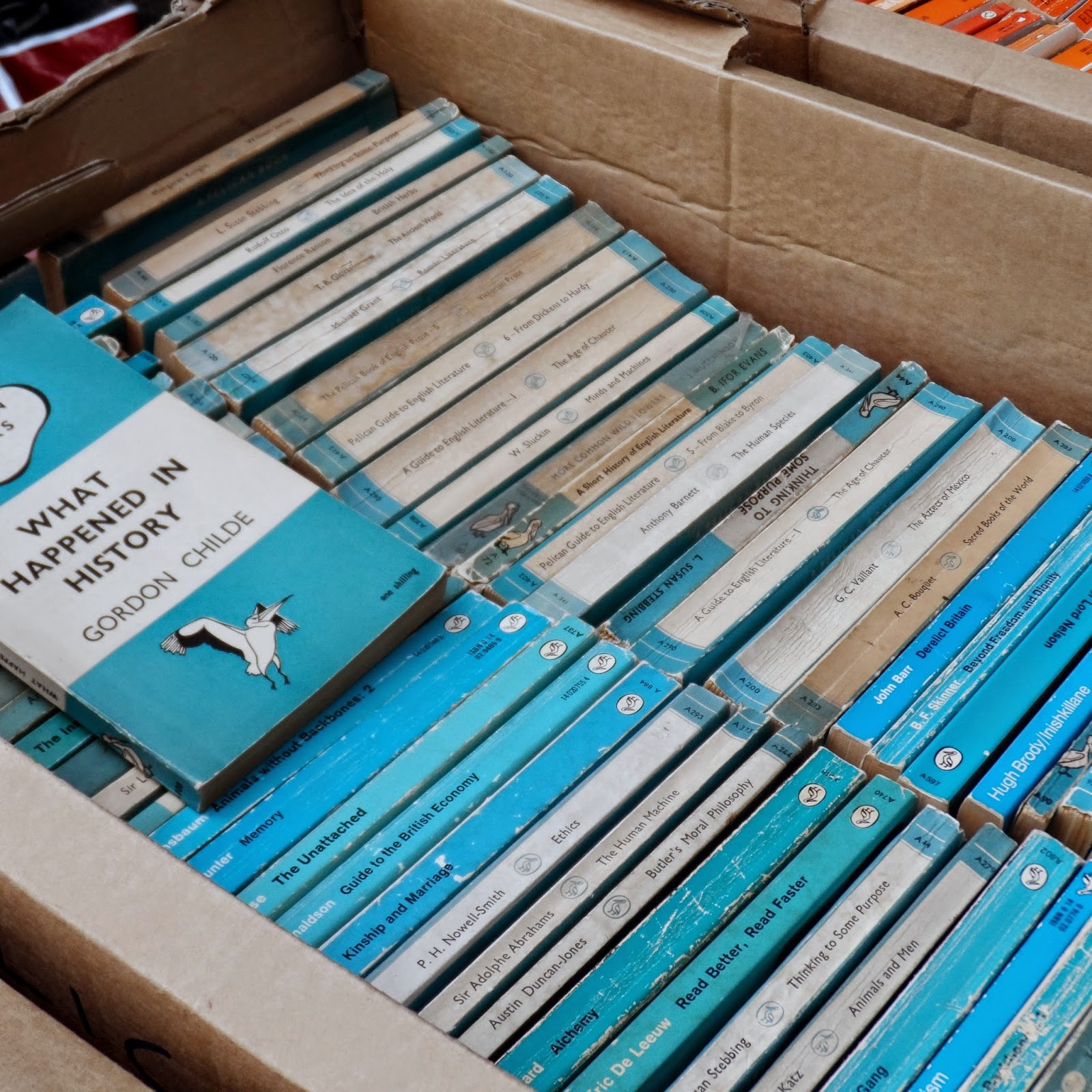
Nothing makes me happier than secondhand book stalls. Such jewels and bargains to be found last week at a Christian Aid book fair in George Street, literary fiction and non-fiction for £1 - boxes and boxes of  books, including Penguins and Pelicans. It was sunny and there were trestle tables outside, it was like Paris. It reminded me of how much I love paper books. And I wondered what secondhand book fairs/shops will be like in fifty years. Will they even exist?

Wednesday, 5 March 2014

Doctors who know what they're talking about


Doctors who know what they're talking about, the opposite of the Wessely school.

And here is more on the nonsense of the PACE trial by Neil Riley, chairman of ME Association. I think we should remind ourselves of what Wessely said in 2011:  'For those who appreciate these things, the trial is a thing of beauty'. He  also described the trial as 'large and elegant'.

Enough to make you weep.

Tuesday, 4 February 2014

Different kinds of light

The exhibition of Chinese lantern warriors at Edinburgh University is beautiful and haunting, the figures sway gently in the wind, the old quad is a gorgeous backdrop. These ninety figures made me think of Jelly Babies marching. And there are benches for resting, always important.


And Bruce Munro's 'Field of Light', which I have not yet seen, has just opened in St Andrew Square. It looks like a glorious field of glass tulips. We are lucky to have these wonderful installations on our doorstep.

Light also in the news that 8000 research journals will now be available free online in public libraries. No more ludicrous paywalls to access  papers of interest.

And more light in American journalist David Tuller's recent article on the absolute inadequacy of the name Chronic Fatigue Syndrome to describe a serious neuroimmune illness (the name was coined in the USA after the Lake Tahoe outbreak in 1984. Dr Dan Peterson has since apologised for the nonsense of such a name). Tuller’s excellent article makes the point that the illness myalgic encephalomyelitis (ME) is not owned by any one speciality, this is true, and this is perhaps why it was possible for psychiatrists in the UK to flood into the ‘void’ and try to own the illness themselves.

I *can* see how the terminology is confusing for outsiders. In the UK, ME has been known as ME since the mid-1950s (and WHO has recognised it as a neurological illness since 1969). It was only towards the end of 1980s that the 'CFS' terminology came in to use in the UK, thanks largely to the core of psychiatrists known as the Wessely school. This school effectively tried to ‘disappear’ ME and replace it with CFS, a nebulous fatigue syndrome that is a thousand miles away from the complex neuroimmune illness that is ME. They started to use the label ‘CFS’, but this slowly became ‘CFS/ME’ as they tried to merge the illnesses and dilute the criteria for ME. And,  confusingly, ME is also now referred to as ‘ME/CFS’ by doctors who *do* believe in ME. And CFS is, even more confusingly, also the research term used across the board. 

My rule of thumb is if you see the term 'CFS/ME', you know you are dealing with skulduggery.

When I was diagnosed with ME in early 1984 - 16 months after becoming ill with Coxsackie b4 virus - by a consultant neurologist, I had never heard of Coxsackie or ME and had to educate myself. It is hard to imagine now how very little information there was in the public arena. Personally, I always refer to my illness as ME, this is the illness I have, I simply don’t know what CFS is. And the fact remains that the psychiatric lobby's choices of treatment - graded exercise and CBT - don’t make people with ME better, and in fact often make people worse. In spite of  its best attempts to 'out' us as a patient population suffering from false illness beliefs, we remain ill. The obfuscation and conflation of ME with nebulous fatigue syndromes is simply not sustainable.

Finally, I welcome this event featuring Dr Mark VanNess speaking about  the safety of exercise in PWME tomorrow in Bristol, and the wonderful Dr Nigel Speight. I wish I could go. Actual scientists, lighting the way, like hundreds of  marching lantern warriors. More on Dr VanNess's work here.


Friday, 31 January 2014

David Tuller article

Good article from American journalist David Tuller on the absolute inadequacy of the name chronic fatigue syndrome to describe a serious neuroimmune illness (the name was coined in USA after the Lake Tahoe outbreak. Dr Dan Peterson has since apologised for the nonsense of such a name). It is heartening to see journalists write factually about the illness, instead of the typically ignorant, influenced by Wessely school, articles we see here in UK - I don't know of any health editors who have tackled the subject of ME honestly or  with any real scientific curiosity.

David Tuller’s excellent article makes the point that the illness ME is not owned by any one speciality, this is true, and this is perhaps why it was possible for psychiatrists in the UK to flood into the ‘void’ and try to own the illness themselves. When I was diagnosed with ME in early 1984 - 16 months after becoming ill with Coxsackie b4 virus - by a consultant neurologist, I had never heard of Coxsackie or ME and had to educate myself. Dr Melvin Ramsay’s book ‘The Saga of Royal Free Disease’ is an excellent introduction. His book actually refers to the Coxsackie outbreak in west of Scotland which triggered my own illness.

I can see how the terminology is confusing for outsiders. In the UK, myalgic encephalomyelitis (ME) has been known as ME since the mid-1950s (and WHO have recognised it as a neurological illness since 1969). It was only towards the end of 1980s that the chronic fatigue syndrome/CFS terminology came into use in the UK, thanks largely to the core of psychiatrists known as the Wessely school. This school tried to ‘disappear’ ME and replace it with CFS, a nebulous fatigue syndrome that is a thousand miles away from the complex neuroimmune illness that is ME. They effectively tried to banish ‘ME’ and instead used ‘CFS’, but this slowly became ‘CFS/ME’ as they tried to merge the illnesses and dilute the criteria (for ME). And,  confusingly, ME is also now referred to as ‘ME/CFS’ by doctors who *do* believe in ME. (And CFS is, even more confusingly, also the research term used across the board.)

Personally, I always refer to my illness as ME, this is the illness I have, I simply don’t know what CFS is. I have seen my illness being  hijacked by the Wessely school over the last two decades, but the fact remains that their choices of treatment - graded exercise and CBT - don’t make people with ME better, and in fact often make people worse. In spite of the psychiatric lobby’s best attempts to out us as a patient population suffering from false illness beliefs, we remain ill. The obfuscation and conflation of ME with nebulous fatigue syndromes is simply not sustainable. 

Sunday, 12 January 2014

Part Two of Trusadh: 'The Toxic Tiredness' on BBC Alba

Part Two of  'The Toxic Tiredness' documentary airs tomorrow night - Monday 13th - on BBC Alba at 9pm (and repeated tomorrow at 10pm). My original response to episode two from January 2012 is here.  I am only briefly in part two: 17 secs, 47 mins and 48:50 mins. Professor Behan appears at 35 mins, he diagnosed me in late 1983/early 1984 with severe post-viral fatigue syndrome/myalgic encephalomyelitis, after specific antibody titres of Coxsackie including IgM; lymphocyte subset analysis; detailed single fibre EMG and measurement of jitter; and specific muscle biopsy.

I had by then been ill for almost 18 months after becoming ill with Coxsackie B4 virus, my Honours degree/year abroad in ruins. I remain grateful that I was seen and treated by a consultant neurologist before the Wessely school began to hijack and really take hold of this illness a decade later, conflating it with idiopathic 'chronic fatigue'. Interestingly, in all of his writings, Professor Wessely tends not to reference key-players in the world of ME in the eighties, doctors like  Behan and Melvin Ramsay and Betty  Dowsett and John Richardson.

*
This film with Dr Nigel Speight is also an eye-opener, he intervenes on behalf of children with ME who have not been believed by psychiatrists/paediatricians/social workers. He describes the collusion of such professionals, their false belief that they have effective treatments in the form of graded exercise and CBT. I can only imagine the horror  of being a child or a parent of a child who is severely ill and not believed. I was not yet nineteen when I first became became ill, but at least I could not be bullied into treatments that would make me worse. An ill child is so dependent on others to do what is best for them. And they wonder why people with ME are anti-psychiatry!

If anyone has a child with a diagnosis of ME, Tymes Trust is a brilliant charity. If I had a poor wee one with this illness, this is where I would go for advice. Children do seem to have a better prognosis than adults, but being able to rest sufficiently is paramount to recovery.

Monday, 6 January 2014

Art & catastrophe, & BBC Alba documentary, repeated on 6 and 13 January

The BBC Alba 'Toxic Tiredness' documentary from January 2012 is being repeated tonight at 9pm*. The Gaelic parts are, of course, subtitled. I previously blogged about both episodes here (part one) and here (part two). I appear in episode one right at the beginning looking like a bag lady, with my usually rather funky prescription sunglasses - they filmed us at weird angles outside for a few shots, the effect is alienating and disorienting, maybe that was the intention. And then at approx - 2.30, 7:30, 13, 18:30, 24, 29, 40:50 and 48 mins (I talk about the novel here and read an extract).

And Professor Peter Behan, the consultant neurologist who diagnosed me in 1983/84, appears in episode two, 35 mins in. He is magnificent. I especially liked:

  '... there is an essential biochemical component to the illness which needs to be elucidated, and research should be along the grounds into these illnesses rather than dealing with psychological talk the talk nonsense'

Dr Charles Shepherd  of the ME Association - also diagnosed by Peter Behan -  makes a great contribution too (though I don't necessarily agree with *everything* he says). The early-mid eighties was still a hard time to get a diagnosis, it took me almost 18 months, but  the psychobabble that we know today was yet to reach its dizzying heights of obfuscation -  this conflation of  serious neuroimmune illness with 'chronic fatigue' has, as we know only too well, done untold damage. We can only hope that science is now progressing, albeit slowly, unfettered by the hijackers. Here's to some decent biomedical research in 2014.

* Part 1 repeated Tuesday 7th at 10pm and soon on iPlayer

*

And I came across these wonderful photos by Penny Clare the other day on the Centre for Medical Humanities blog. She took them while severely affected and bedridden. I particularly like A fingernail celebrates New Year (I don't want to breach copyright so am not posting any photos here).

 More of Penny's photos can be seen on the excellent Phoenix Rising site.


For me, these photos highlight the link between creativity and illness, we are 'forced' by the illness into places we never knew we would go. We are still ourselves but catastrophe has given us a different way of expression. I often think of my novel/fiction as  my response to catastrophe. Writing often is.

Friday, 22 February 2013

Dissecting Edinburgh; dissecting nonsense

I have only done readings very occasionally so am very pleased about this (free!) event in a couple of months' time, part of the 'Dissecting Edinburgh' series at Surgeon's Hall, Edinburgh - 'Literature and Medicine in the Scottish Capital'. I will enjoy thinking back to the process of writing and editing the novel, much of which I did in bed, getting red felt pen on my pillows. I very much hope those who are running the new  'ME-CFS' Astley Ainslie Clinic in Edinburgh will attend - and those in the Scottish government who are funding this 2-year pilot project. The new 'CFS-ME' clinic or 'ME-CFS'  - or whatever thay happen to call it on the day - charmlessly and ludicrously continues to conflate neuroimmune illness with mental illness. This invented hybrid-illness label benefits no one, but still the biopsychosocials persist, in spite of the mountain of biomedical evidence worldwide; in spite of the Scottish Good Practice Statement caveat that ME patients claim to be made worse by graded exercise; and in spite of the PACE trial being unmasked as la la la nonsense.

And am aghast at the wording in the job description last year for a psychologist at the new 'CFS-ME' clinic, (you have to scroll down), which someone on Twitter sent me: This caseload will include a proportion of complex cases eg. Patients who have experienced previous sexual abuse, have active suicidal ideation or have pre existing mental health problems.

Do people with MS and lupus also usually share clinics with those who have 'complex medical histories, suicide ideation and experienced sexual abuse'?  I think not. Of course such patients need huge support too, but why are they told they have a neuroimmune illness when they don't? (And I would bet thoughts of suicide come to anyone dealing with serious, abject chronic illness at some point, whether it is ME or not, and that the proportion of those with ME who have also suffered abuse is no higher than any other neuro/physical illness.) As has been said a million times - and will continue to be said - it  is the massively flawed criteria (yawn yawn yawn) that result in over-diagnosis of ME in the first place. The people behind setting up this clinic obviously haven't read the International Consensus for Criteria on ME (2011). Or have chosen to ignore it (one  suspects they ignore a lot of what doesn't fit with ther flawed views). And they honestly wonder why people with my illness are 'hostile' when faced with this crap?

And the wording on the patient leaflet is simply bizarre - only patients who have 'been given, and accepted, a diagnosis of ME-CFS' are invited. 'Accepted', what on earth does that mean? The GP leaflet is even worse: We will not be able to consider domiciliary visits or extremely entrenched, complex patients. So basically they can't help severely ill, housebound/bedbound people with ME, but only those who are mobile and open to brainwashing. The leaflet states that the service will be over-subscribed so not everyone referred will be accepted, but not to worry, I won't be asking for a referral any time soon (being entrenched and all.) And note the symptoms, 'persistent, excessive tiredness or fatigue', nothing about post-exertional malaise or post-exertional neuroimmune exhaustion - the cardinal feature of ME - or viral trigger. So GPs are unwittingly (or not) colluding in the whole hybrid-illness charade.

I used to be comforted by the fact we didn't have any of these GET/CBT - pretending to help but actually challenging false illness beliefs - clinics in Scotland. But alas, the Wessely school has come to roost in Edinburgh. Sadly, NHS Lothian are myopic in the extreme if they think people with my illness will be helped a jot by this. What a waste of money! Anyone and everyone with idiopathic chronic fatigue is simply thrown into the 'ME-CFS' bucket. I'm so glad I didn't have a crystal ball in 1983, sitting on the orange chairs of the neurology clinic in Glasgow, so wretchedly ill. Really, is it too much to ask that in 2013 we can have just an ME clinic for people with ME? Apparently so. (And how about offering something useful  like therapeutic massage instead of  goddamn aerobics. Then I might go.) I am so very, very, very tired of this adding on of any and every unexplained fatigue handle to ME; it's a kind of blasphemy. This clinic is a fatigue clinic, nothing else, so please let's not pretend it is for my illness (Ramsay-defined ME for anyone who is curious).

Anyway, back to the writing: the day Helen Fleet is diagnosed in 1983 by consultant neurologist, chapter eight of The State of Me:

*

A week before my twenty-first, I was summoned to Bob’s consulting room for the second time. He was expressionless as I sat down on the orange chair.

You have a whole range of abnormalities, he said. Your muscles aren’t producing energy normally.

Why not? I said.

We think you have ME, myalgic encephalomyelitis. It’s a post-viral syndrome, triggered by the Coxsackie virus, in your case. There’s no cure and it can last for five years. We’re doing some clinical trials which we would like you to take part in. We’ll be in touch. Can you ask your mother to come in now?

I came out and Rita went in. Someone had left a Daily Record on the chair next to mine. I picked it up and looked at the front-page photo of Princess Diana with her six-week-old baby.

When Rita came out of Bob’s room, her eyes were watering.

On the way home in the car, I hoped we’d crash and that I’d be killed instantly and Rita would walk away without a scratch. I kept thinking of the David Bowie song ‘Five Years’: . . . five years left to cry in . . . steady drums, louder and louder and louder . . . five years, stuck on my eyes, high violiny bit.

*

Helen has a diagnosis! Hurrah! Hurrah! Hurrah! She has blah-de-blah-de-blah, it’s official! She’s got Malingerer’s Elbow! She’s chronically fatigued! She’s a yuppie with flu! Whatever your point of view, she’s fucked.

 *

I shift between first person and third person throughout the book, third person to show her most ill, isolated times, and of course, the third person narrator has a knowingness that Helen doesn't. ie that 'chronic fatigue' will come to be the tragic misnomer for Helen's illness a decade down the line, that myalgic encephalomyelitis, the neuroimmune process that has punched into her life, will be endangered as a diagnosis, hijacked by psychiatrists. The flitting between third and first was mostly intuitive, it just happened. I also use asterisks a lot - and present tense - to slow down the pace, though the asterisks have been lost in the Kindle edition, but I'm told it hasn't detracted from the experience of reading the novel, but I still prefer the paperback version for this reason, while delighted that people can also read the e-version.

And back to the event (sorry, but this CFS nonsense in Edinburgh is just upsetting and distracting). There are two other writers, Tracey Rosenberg and Alison Summers, also reading,  about cancer and Pick's Disease, respectively. I don't think I've ever been  inside  Surgeon's Hall, trying not to think about how big it might be, I imagine a big draughty lecture hall, but maybe it'll be a wee cosy room, and I've told them I'll need to sit down to read. More than ever the truth of this illness needs to be told, and my novel does just that. I am delighted to  be part of this Medicine and Writing event.